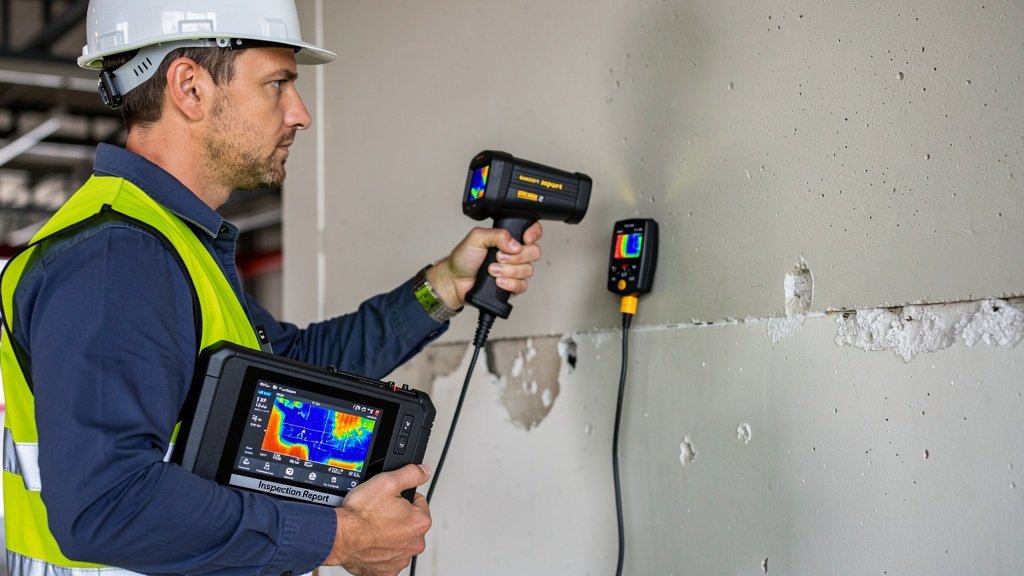
My Commercial Building Surveyors work extensively with property investors, developers, and institutional funds acquiring commercial real estate portfolios worth millions of pounds. Through this work, we've witnessed how comprehensive technical due diligence (TDD) protects investors from catastrophic financial losses, while its absence has led to deals unraveling after exchange or completion when hidden defects surface.
This expert guide explains technical due diligence in commercial property acquisition, what TDD reports include, how they differ from standard building surveys, and why smart investors never complete major property transactions without this critical safeguard.
What Is Technical Due Diligence?
Technical due diligence is a comprehensive assessment of a commercial property's physical condition, compliance status, and suitability for intended use. Conducted by qualified RICS chartered surveyors and specialist consultants, TDD provides investors with detailed intelligence about building condition, capital expenditure requirements, regulatory compliance, and operational risks.
Unlike standard commercial building surveys designed for single property purchases, technical due diligence reports are specifically tailored for investment transactions. They focus on financial implications, investment risk assessment, and strategic decision-making rather than purely technical condition reporting.
Critical Insight: Technical due diligence transforms physical building information into financial intelligence. Our TDD reports quantify repair costs, forecast capital expenditure timelines, assess income risk from tenant repairing obligations, and identify factors that could affect property valuation or investor returns.
Why Property Investors Need Technical Due Diligence
Commercial property investments represent substantial capital commitments with long-term financial implications. My Commercial Building Surveyors have seen numerous cases where thorough technical due diligence prevented disastrous investments or enabled significant price renegotiations.
Real-World Example: £1.2M Hidden Liability
One of our investor clients was acquiring a £8.5 million office portfolio when our technical due diligence discovered concealed structural movement, obsolete mechanical systems approaching failure, and fire compartmentation breaches requiring immediate rectification. Total hidden liabilities exceeded £1.2 million—costs the vendor hadn't disclosed and the investor hadn't anticipated.
Armed with our comprehensive TDD report, the client renegotiated a £1 million price reduction and required the vendor to complete essential fire safety works pre-completion. Without technical due diligence, they would have faced unexpected expenditure immediately after acquisition, destroying their investment returns and creating cash flow problems.
Key Benefits of Technical Due Diligence:
- Investment risk mitigation: Identify problems before capital is committed and transactions become difficult to exit
- Accurate financial modeling: Build realistic capital expenditure forecasts into investment appraisals
- Price negotiation leverage: Use factual evidence of defects and required expenditure to justify offer adjustments
- Informed decision-making: Proceed with confidence, renegotiate terms, or withdraw based on comprehensive property intelligence
- Funding compliance: Satisfy lender requirements for independent technical assessments of security properties
- Portfolio management: Prioritize capital expenditure across multi-property acquisitions
What Does Technical Due Diligence Include?
My Commercial Building Surveyors deliver comprehensive TDD packages tailored to transaction requirements. While scope varies by property type and investor needs, typical technical due diligence investigations include:
1. Building Condition Survey
Detailed inspection and assessment of the property's physical condition across all elements:
- Structure: Foundations, walls, floors, roofs—identifying defects, movement, or deterioration
- External fabric: Condition of walls, windows, doors, external areas, car parks
- Internal finishes: State of decoration, floor coverings, ceilings, partitions
- Services installations: Assessment of mechanical, electrical, plumbing, HVAC systems
- Accessibility and DDA compliance: Building Regulations and Equality Act compliance
2. Measured Survey and Floor Plans
Accurate measurement of gross internal area (GIA), net internal area (NIA), and floor-by-floor plans verifying:
- Actual floor areas match vendor's marketing particulars and lease documentation
- Correct calculation of service charges and rent reviews
- Identification of discrepancies that could affect investment valuation
3. Mechanical and Electrical (M&E) Systems Assessment
Specialist building services engineer inspection covering:
- Heating, ventilation, and air conditioning (HVAC) condition and remaining life
- Electrical installations, capacity, and compliance with BS 7671
- Life safety systems—fire alarms, emergency lighting, sprinklers
- Vertical transportation—lifts and escalators condition reports
- BMS (Building Management Systems) functionality
- Energy performance and potential efficiency improvements
4. Environmental Investigations
- Asbestos surveys: Management surveys identifying ACMs and remediation requirements
- Contaminated land assessments: Phase I desk studies and Phase II intrusive investigations where indicated
- Ecology surveys: Protected species assessments for sites with development potential
- Flood risk assessments: Evaluation of flood zones and mitigation measures
5. Fire Safety and Regulatory Compliance
- Fire Risk Assessments compliant with Regulatory Reform Order 2005
- Compartmentation integrity surveys identifying breaches
- Means of escape adequacy and signage
- Fire alarm and detection systems compliance
- Building Regulations compliance review
6. Capital Expenditure Forecasting (CAPEX)
My Commercial Building Surveyors provide detailed capital expenditure forecasts covering the next 10-15 years:
- Immediate repairs (Year 0-1): Essential works required urgently—typically £XXX,XXX
- Short-term maintenance (Years 1-3): Necessary repairs protecting building condition—typically £XXX,XXX
- Medium-term renewals (Years 3-7): Component replacements approaching end of life—typically £XXX,XXX
- Long-term planning (Years 7-15): Major systems replacements and refurbishment—typically £XXX,XXX
These forecasts enable accurate investment modeling, demonstrating true cost of ownership beyond acquisition price.
7. Lease Analysis and Repairing Obligations
Review of tenant leases identifying:
- Tenant vs landlord repairing obligations under FRI or internal repairing terms
- Schedule of condition limitations reducing tenant liability
- Service charge recovery provisions and cap arrangements
- Dilapidations risks and potential end-of-lease income impacts
Need Technical Due Diligence for Your Acquisition?
Protect your investment with comprehensive TDD from our RICS chartered surveyors. Fast turnaround to meet tight transaction deadlines.
Get Your TDD QuoteTechnical Due Diligence vs. Standard Building Survey
Understanding the distinction helps investors commission the right service for their needs:
Standard Commercial Building Survey
- Suitable for: Owner-occupiers, single property purchases, small investors
- Focus: Technical condition description and defect identification
- Report style: Detailed narrative describing building condition element-by-element
- Cost estimates: General indicative budgets for repairs
- Timescale: 5-7 working days typical delivery
Technical Due Diligence Report
- Suitable for: Property investors, developers, institutional funds, portfolio acquisitions
- Focus: Investment risk assessment and financial implications
- Report style: Executive summary with detailed technical appendices, CAPEX schedules, risk matrices
- Cost estimates: Precise contractor quotations for major works, 10-15 year capital expenditure forecasts
- Timescale: 10-15 working days (can expedite for urgent transactions)
- Additional elements: Environmental reports, M&E specialist surveys, measured surveys, fire assessments
My Commercial Building Surveyors tailor technical due diligence scope to match transaction complexity, investment strategy, and lender requirements while controlling costs.
The TDD Process: What to Expect
Phase 1: Instruction and Scoping (Days 1-2)
- Initial consultation understanding acquisition strategy, concerns, and timeline
- Review of vendor's information pack, title documents, and lease details
- Scope agreement defining investigations required and fee proposal
- Professional indemnity insurance confirmation for lender/investor requirements
Phase 2: Site Investigations (Days 3-6)
- Comprehensive building survey inspection—typically 4-8 hours depending on property size
- M&E specialist assessment of services installations
- Measured survey if floor areas require verification
- Asbestos survey coordinating specialist contractors
- Photographic documentation of all defects and concerns
Phase 3: Specialist Sub-Reports (Days 5-10)
- M&E consultant's detailed systems assessment
- Asbestos laboratory analysis and management report
- Environmental desktop study or intrusive investigations
- Fire risk assessment by competent person
- Structural engineer input where significant concerns identified
Phase 4: Cost Estimates and Analysis (Days 8-12)
- Quantity surveyor preparation of detailed repair cost estimates
- CAPEX forecasting model development
- Risk assessment and priority categorization
- Lease obligation analysis and dilapidations forecasting
Phase 5: Report Delivery (Days 10-15)
- Comprehensive TDD report with executive summary, detailed findings, CAPEX schedules, and appendices
- Presentation meeting explaining key findings and investment implications
- Support for renegotiation discussions with vendor or their advisors
- Clarification responses to lender or investor queries
Common Red Flags TDD Identifies
Our experienced team of surveyors regularly discovers issues during technical due diligence that significantly impact investment decisions:
1. Undisclosed Structural Movement
Progressive cracking indicating ongoing settlement or structural instability requiring expensive underpinning or remediation costing £100,000-£500,000+.
2. Imminent System Failures
Aging boilers, failing air handling units, or obsolete electrical installations beyond economic repair requiring immediate replacement investment of £50,000-£300,000.
3. Fire Safety Non-Compliance
Compartmentation breaches, inadequate means of escape, or non-compliant fire safety systems creating enforcement risk and requiring rectification costing £75,000-£250,000.
4. Environmental Liabilities
Asbestos requiring removal before refurbishment (£50,000-£150,000) or contaminated land issues affecting development potential or triggering regulatory remediation.
5. Area Discrepancies
Measured floor areas 5-15% below vendor's marketing particulars, affecting rental income calculations and investment valuation by hundreds of thousands of pounds.
6. Lease Obligation Risks
Full repairing and insuring leases with inadequate schedules of condition exposing landlords to limited dilapidations recovery at lease end.
How TDD Informs Investment Decisions
Proceed with Confidence
When technical due diligence confirms property condition aligns with vendor representations and no significant hidden liabilities exist, investors proceed knowing their acquisition price reflects true property value.
Renegotiate Price
Identified defects and quantified repair costs provide factual basis for price reductions. My Commercial Building Surveyors' TDD reports have secured price adjustments of £200,000-£2,000,000+ for investor clients.
Require Vendor Remediation
For critical issues like fire safety or structural defects, investors can make completion conditional on vendor rectification or retention of funds against remediation costs.
Withdraw from Transaction
When technical due diligence reveals fundamental problems destroying investment viability, withdrawing before exchange protects capital for better opportunities.
Cost of Technical Due Diligence
TDD investment varies based on property complexity, size, and investigation scope:
- Small single properties (e.g., single retail unit, small office): £5,000-£12,000
- Medium properties (e.g., multi-tenanted office building): £12,000-£25,000
- Large/complex properties (e.g., shopping centers, industrial estates): £25,000-£75,000+
- Portfolio acquisitions: Negotiated per-property rates reflecting economies of scale
Value Perspective: Technical due diligence typically costs 0.1-0.5% of acquisition price but routinely identifies issues affecting 2-15% of property value. The return on investment is exceptional—protecting capital from losses that could destroy investment returns.
Choosing a Technical Due Diligence Provider
Not all building surveyors provide true technical due diligence. Investor-grade TDD requires specific expertise:
Essential Qualifications and Experience
- RICS chartered surveyor status: Ensures professional standards and PI insurance
- Investor-focused experience: Understanding financial implications, not just technical condition
- Specialist consultant network: Access to M&E engineers, environmental specialists, quantity surveyors
- Transaction experience: Understanding tight timelines and commercial pressures
- Report quality: Executive summaries and clear risk matrices for quick decision-making
- Professional indemnity insurance: Adequate cover for transaction values
My Commercial Building Surveyors specialize in technical due diligence for commercial property investors, providing the comprehensive intelligence serious investors demand.
Frequently Asked Questions
Can I rely on the vendor's building survey?
Never rely solely on vendor-commissioned reports. These surveys serve the vendor's interests, may be outdated, and could omit critical issues. Independent technical due diligence protects your investment.
How quickly can TDD be completed?
Standard delivery is 10-15 working days, but My Commercial Building Surveyors can expedite critical transactions to 5-7 days when necessary to meet exchange deadlines.
What if TDD identifies major problems after I've offered?
Technical due diligence should be completed before exchange of contracts when you remain free to renegotiate or withdraw. Problems identified pre-exchange give you negotiating power; post-completion discoveries leave you liable.
Do lenders require technical due diligence?
Most commercial property lenders require independent technical assessment of security assets, particularly for loans exceeding £2-3 million or complex properties.
Conclusion: Essential Protection for Serious Investors
Technical due diligence is the single most important risk mitigation tool available to commercial property investors. My Commercial Building Surveyors have protected hundreds of investors from catastrophic losses while enabling confident acquisition decisions based on comprehensive property intelligence.
Smart investors understand that technical due diligence costs represent a tiny fraction of acquisition value but deliver exponential returns through risk mitigation, price negotiation leverage, and informed decision-making. The question isn't whether you can afford technical due diligence—it's whether you can afford the consequences of proceeding without it.
Our RICS chartered surveyors deliver investor-grade technical due diligence for commercial property acquisitions across the UK. We understand transaction pressure, work to tight deadlines, and provide the comprehensive intelligence you need to make confident investment decisions.
Commission Your Technical Due Diligence Report
Protect your commercial property investment with comprehensive TDD from our specialist surveyors. Fast turnaround available for urgent transactions.
Request Your Free Quote